Septic tank is a closed area bounded by materials with required height. Septic tank is essential elements of the residential as well as commercial building for wastage management and treatments.
Septic tank is made up of different materials like, plastic, concrete, bricks, blocks etc. It is constructed according requirements of space, cost, environmental impacts, durability etc. Generally septic tanks are designed according to user in the building.
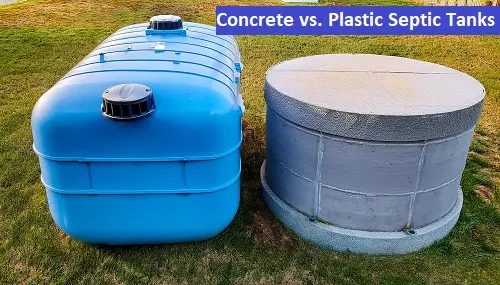
Here, I am providing detailed advantages and disadvantages for which you can decide the suitable septic tank for your building. In short we can say for low budget, we can prefer plastic tank otherwise you can go with concrete septic tanks. let us see Concrete vs. Plastic Septic Tanks one by one.
Recommended Septic Tank Sizes according to User
A) For Residential Buildings
| S.N | Number of Users | Capacity (Cubic Meters) | Dimensions (L x B x H in meters) |
|---|---|---|---|
| 1 | Up to 5 users | 3 m³ | 2.0 m x 1.0 m x 1.5 m |
| 2 | 6–10 users | 4.5 m³ | 2.5 m x 1.2 m x 1.5 m |
| 3 | 11–20 users | 6 m³ | 3.0 m x 1.5 m x 1.5 m |
| 4 | 21–30 users | 9 m³ | 3.5 m x 2.0 m x 1.5 m |
| 5 | 31–50 users | 12 m³ | 4.0 m x 2.5 m x 1.5 m |
B) For Commercial Buildings
| S.N | Number of Users | Capacity (Cubic Meters) | Dimensions (L x B x H in meters) |
|---|---|---|---|
| 1 | Up to 20 users | 6 m³ | 3.0 m x 1.5 m x 1.5 m |
| 2 | 21–50 users | 10 m³ | 4.0 m x 2.0 m x 1.25 m |
| 3 | 51–100 users | 20 m³ | 5.0 m x 3.0 m x 1.35 m |
| 4 | 101–200 users | 40 m³ | 6.5 m x 4.0 m x 1.5 m |
| 5 | 201–500 users | 100 m³ | 10.0 m x 6.0 m x 1.7 m |
Advantages and Disadvantages of Concrete Septic Tanks
| S.N | Advantages | Disadvantages |
|---|---|---|
| 1. | Concrete Septic Tanks are more durable. They are less likely to crack under soil , external pressure or due to external factors like tree roots. | Concrete septic tank is heavy in weight so it requires heavy machinery, making installation challenging. |
| 2. | It has heavy weight which prevents floating even when groundwater water levels rises. | It is more expensive to construct than plastic septic tank. |
| 3. | It can be constructed with high capacity according to user requirements. | It may suffer from different defects like. Freeze-thaw cycles and can cause cracks over time, leading to leaks and repairs. |
| 4. | It can be disigned according to data given by experiance for better performance. | It has susceptibility to corrosion so, steel reinforcements in concrete may rust over time, and damage the structure. |
| 5. | It have more capacity of resistance to environmental Factors like soil acidity, root instruction etc. | It has higher carbon footprint in production and transportation compared to plastic tanks. |
| 6. | Concrete tanks can last approximately 40 years after construction. | Repair and maintanance are required time to time making it more difficult and costly. |
Advantages and Disadvantages of Plastic Septic Tanks
| S.N | Advantages | Disadvantages |
|---|---|---|
| 1. | Plastic septic tank is light in weight which makes easier and less expensive to transport and install. | It is less durable than concrete due to external force like soil pressure and downward load above it. |
| 2. | Its initial cost and instalation cost is more cheaper than concrete septic tank. | It has higher risk of floating or shifting in areas with high water tables. |
| 3. | It is less Resistance to Cracking. | It can be used at limited area by the country for limited users. |
| 4. | Plastic septic tank is Corrosion Resistance which prevents rust or corrosion, extending their lifespan. | Plastic septic tank requires additional support or reinforcement to maintain shape and integrity. |
| 5. | It can withstand minor ground movements without cracking. | It is more susceptible to damage from environmental changes like soil vibrations. |
| 6. | Plastic septic tank is ease for Installation and can be installed without heavy machinery, reducing labor costs. | It has shorter lifespan as compared to concrete septic tanks. |
Cost Comparison between Concrete vs. Plastic Septic Tanks
| Type of Septic Tank | Tank Cost (US) | Installation Cost (US) | Total Cost (US) | Tank Cost (India) | Installation Cost (India) | Total Cost (India) |
| Concrete Septic Tank | $2,000 – $4,000 | $1,500 – $3,000 | $3,500 – $7,000 | ₹150,000 – ₹300,000 | ₹100,000 – ₹200,000 | ₹250,000 – ₹500,000 |
| Plastic Septic Tank | $1,000 – $2,000 | $1,000 – $2,000 | $2,000 – $4,000 | ₹80,000 – ₹160,000 | ₹70,000 – ₹140,000 | ₹150,000 – ₹300,000 |
Frequently Asked Questions (FAQ)
a) Which type of septic tank is better for a high water table area?
Concrete septic tank will be better for high water table area because they have heavy weight which helps to prevent from floating on water.
b) Are plastic septic tanks suitable for all climates?
Yes, Plastic septic tank is suitable for all climates, but in areas with frequent freeze-thaw cycles, plastic septic tank may be less durable than concrete tank.
c) What is the lifespan of a septic tank?
A well-maintained concrete septic tank can last more than 40 years but Plastic tank has shorter lifespan, typically around 20-30 years, depending on conditions and maintenance.
d) Can I install a septic tank myself?
Yes, you can install septic tank yourself if you have better knowledge of installation. But, it’s recommended to hire professionals to ensure proper installation, proper functianality, and do not avoid local regulations.
e) How often should septic tanks be pumped?
By the way pumping depends upon the usage and volume of septic tank. But generally both concrete and plastic septic tanks need to be pumped every 3-5 years, depending on usage and tank size.
Conclusion
According to above information, I hope you can decide which types of septic tank you will selct for you buildings.
By the way if you ask me then I will suggest you to install concrete septic tank for large usage and commercial building and plastic septic tank for small usage and residential buildings. If you consider users then go with concrete septic tank if you have more than 10 users in building.
Read Also,
Septic tank location as per Vastu – Advantages Disadvantages
